




Musée d’Orsay Tours: How to Choose & Book
Quick summary: A Musée d’Orsay tour takes you through the world’s greatest collection of Impressionist and Post-Impressionist art, housed in a magnificent former railway station on the Seine. Works by Monet, Renoir, Van Gogh, Degas, Cézanne and more fill its galleries, making it a favourite for art lovers and a natural companion to the Louvre. Tours range from skip-the-line tickets to expert-guided highlights tours, and combinations with other museums. The collection is more manageable than the Louvre’s, but a guide still adds much to understanding the art. Queues can be long, so booking ahead is advised. This guide covers the tour types, the highlights, and how to visit.
Musée d’Orsay Tours at a Glance
| Detail | Information |
|---|---|
| What it is | Tours of the great Impressionist art museum |
| The building | A magnificent former railway station on the Seine |
| The collection | The world’s finest Impressionist / Post-Impressionist art |
| Famous artists | Monet, Renoir, Van Gogh, Degas, Cézanne and more |
| Main tour types | Skip-the-line, guided highlights, combined |
| Compared to the Louvre | Smaller and more manageable, art-focused |
| Pairs well with | The Louvre and other Paris museums |
| Queues | Can be long — booking ahead advised |
| Best for | Art lovers and Impressionism enthusiasts |
What Is a Musée d’Orsay Tour?
A Musée d’Orsay tour is a guided visit or ticketed entry to the Musée d’Orsay, home to the world’s greatest collection of Impressionist and Post-Impressionist art, housed in a magnificent former railway station on the Left Bank of the Seine.
The museum is beloved for two reasons. First, its collection: the finest gathering anywhere of works from the Impressionist and Post-Impressionist era, with masterpieces by Monet, Renoir, Van Gogh, Degas, Cézanne, Manet and many more — the art that revolutionised painting in the late 19th century. Second, its setting: the building is a beautifully converted former railway station, its vast arched hall and great clock a spectacular backdrop to the art. Together they make the Orsay one of the most rewarding museums in the world.
Tours come in several forms. A skip-the-line ticket gets you past the entry queues to explore independently. A guided highlights tour takes you to the key works with an expert explaining the Impressionist revolution and the stories behind the paintings. Combined tours pair the Orsay with other museums, often the Louvre, for a fuller art experience. The Orsay’s collection is more manageable than the Louvre’s, so it’s less overwhelming to visit, but a guide still adds much to understanding the art and its significance. For art lovers, and anyone drawn to Impressionism, the Orsay is a highlight of Paris and a natural companion to the Louvre.
What Are the Musée d’Orsay’s Highlights?
The Orsay’s collection is rich in famous masterpieces, and knowing the highlights helps you prioritise, though the museum is manageable enough to see thoroughly.
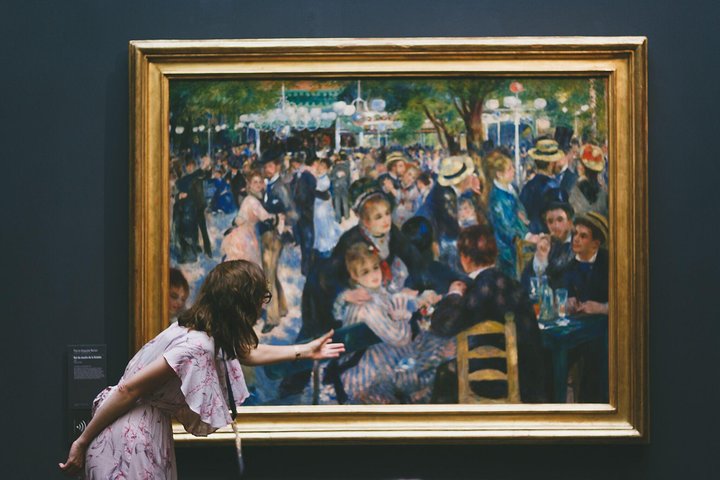
Impressionist masterpieces — the heart of the collection: celebrated works by Monet, Renoir, Degas, Manet and others, capturing the movement that transformed painting with its light, colour and everyday subjects.
Van Gogh — the museum holds major works by Vincent van Gogh, among its most popular draws, including some of his most famous and emotionally powerful paintings.
Post-Impressionists — works by Cézanne, Gauguin, Seurat and others who built on and moved beyond Impressionism, bridging toward modern art.
Degas and the dancers — Edgar Degas’s famous paintings and sculptures, including his beloved ballet dancers.
The building and the clock — the former railway station itself, with its magnificent arched hall and the famous great clock, through which you can photograph the city — a highlight in its own right.
Sculpture and decorative arts — beyond painting, the museum holds sculpture and decorative arts of the period.
Because the Orsay is more compact than the Louvre, you can realistically see its highlights and much more in a single visit without the same risk of being overwhelmed. Still, knowing the headline works — the Impressionists, Van Gogh, the Post-Impressionists, Degas — helps you make the most of your time. A guided highlights tour covers these efficiently with context, while the manageable scale also makes independent exploration pleasant. Don’t miss the building itself and the famous clock, which are part of what makes the Orsay special.
Why Take a Guided Musée d’Orsay Tour?
A guided tour adds value at the Orsay, particularly for understanding the art, though the museum’s manageable size makes independent visits easy too.
Understanding the art — the Impressionist and Post-Impressionist movements are rich with stories and significance, and a guide explains the revolution in painting, the artists’ lives, and what makes the works important — turning viewing into understanding.
Skip-the-line access — guided tours include priority entry, avoiding the queues, which can be long at this popular museum.
Efficient highlights — a guide takes you to the key masterpieces with context, ideal if your time is limited or you want to be sure you see the best.
Bringing the era to life — the late-19th-century art world — the Impressionists’ struggles, innovations and relationships — is a compelling story that a good guide tells well.
The trade-offs — a guided tour costs more than a ticket and follows a set pace, and because the Orsay is manageable in size, confident visitors may be happy exploring independently with a skip-the-line ticket and perhaps an audio guide.
So a guided tour suits those who want to understand the art and its revolutionary context, see the highlights efficiently, and have the era brought to life — which enriches the experience considerably for anyone beyond a casual glance. A skip-the-line ticket suits confident, independent visitors, and because the Orsay is more compact than the Louvre, exploring alone is genuinely pleasant here and less daunting than at the larger museum. The queues are the main practical consideration, so some form of skip-the-line access is worth having whichever way you visit. For Impressionism enthusiasts especially, the depth a guide adds is often well worth it.
How Does the Orsay Compare to and Combine with the Louvre?
The Orsay and the Louvre are Paris’s two great art museums, and understanding how they differ and combine helps you plan an art-focused visit.
Different periods — the Louvre covers art from antiquity to the mid-19th century, while the Orsay picks up where the Louvre leaves off, focusing on the later 19th century and the Impressionist and Post-Impressionist era. Together they tell a continuous story.
Different scale — the Louvre is vast and can be overwhelming, while the Orsay is smaller and more manageable, so it’s a gentler, more focused museum experience.
Different character — the Louvre is a former royal palace housing a universal collection; the Orsay is a former railway station devoted to a particular, beloved era of art. Each has its own appeal.
Combining them — many visitors and tours pair the two, often on separate days given the Louvre’s size, to experience the full sweep of Western art from ancient times through Impressionism. Combined tickets and tours make this convenient.
Which to prioritise — if you love Impressionism, the Orsay may be your highlight; if you want the famous masterpieces and antiquities, the Louvre. Many art lovers want both.
So the Orsay and the Louvre are complementary rather than competing: the Louvre for the grand sweep of older art and its famous treasures, the Orsay for the beloved Impressionist and Post-Impressionist era in a more manageable setting. Visiting both gives the fullest picture of Western art, and combined tickets or tours make it convenient, though the Louvre’s scale means they’re often best done on separate days. If you must choose one, let your taste decide: Impressionism lovers often find the Orsay the more enjoyable, while those wanting the headline masterpieces lean to the Louvre.
When Is the Best Time to Visit the Musée d’Orsay?
Timing your visit helps with the crowds, which are the main practical consideration at this popular museum.
Time of day — the museum is busiest in the middle of the day. Going at opening or later in the afternoon is quieter, and the Orsay has a late evening opening on certain days, which is often calmer and atmospheric.
Day of the week — weekends are busier than weekdays, and the museum is closed one day a week, so check current opening days. The day the Louvre is closed can be busier at the Orsay, and vice versa.
Season — summer and school holidays are busiest. Spring and autumn offer a good balance, and winter (outside the Christmas period) is quietest — an advantage for an indoor attraction.
Weather — as an indoor museum, the Orsay is weather-independent and a great rainy-day choice, though that also means more visitors when the weather turns.
Booking ahead — whenever you go, booking in advance is advised, as queues can be long and skip-the-line access saves time.
So for the calmest visit, aim for a weekday in spring, autumn or winter, arriving at opening or going for the late evening session, and book ahead. Being indoors, the Orsay is an excellent choice when the weather is poor, though you’ll have company, so advance booking and skip-the-line access matter more then. Exact opening days, hours and evening sessions are set by the museum and can change, so check current details when planning. Note that the Orsay and the Louvre have different weekly closing days, which is worth coordinating if you want to visit both.
Practical Tips for Musée d’Orsay Tours
- Book ahead — queues can be long, and skip-the-line access saves time.
- It’s more manageable than the Louvre — you can see the highlights in a visit.
- Don’t miss the building — the former station and great clock are highlights.
- Consider the late evening opening on certain days for a calmer visit.
- Pair with the Louvre for the full sweep of art, ideally on separate days.
- Check the weekly closing day — it differs from the Louvre’s.
- A great rainy-day choice — but busier when the weather’s poor.
Are Musée d’Orsay Tours Worth It?
For art lovers, and anyone drawn to Impressionism, a Musée d’Orsay tour is well worth it — the museum holds the world’s greatest collection of Impressionist and Post-Impressionist art in a magnificent setting, and is one of the most rewarding museums anywhere.
The appeal is twofold. The collection is extraordinary: masterpieces by Monet, Renoir, Van Gogh, Degas, Cézanne, Manet and more, the art that revolutionised painting in the late 19th century, gathered in greater depth than anywhere else in the world. And the setting is spectacular: a beautifully converted former railway station, its vast arched hall and famous great clock a highlight in their own right. A guided tour brings the Impressionist revolution to life, explaining the artists, their innovations and the significance of the works, while skip-the-line access spares you the queues. For understanding and appreciating the art, rather than just glancing at it, the context a guide provides is genuinely enriching.
The honest considerations are cost and the museum’s manageable scale. A guided tour costs more than a ticket, and because the Orsay is far more compact than the Louvre, confident visitors can explore it independently and pleasantly with just a skip-the-line ticket and perhaps an audio guide, without the risk of being overwhelmed that the Louvre carries. The queues are the main practical issue, so some skip-the-line access is worth having regardless.
But these are minor caveats. Whether you take a guided highlights tour for the full context or explore independently with a skip-the-line ticket, the Musée d’Orsay is a joy, and for Impressionism lovers often the highlight of Paris’s museums. It pairs beautifully with the Louvre for the full sweep of art. Thoroughly worth it — just book ahead to avoid the queues, and don’t miss the building and its famous clock.
A Musée d’Orsay tour is a guided visit or ticketed entry to the Musée d’Orsay, home to the world’s greatest collection of Impressionist and Post-Impressionist art, housed in a magnificent former railway station on the Left Bank of the Seine. It holds masterpieces by Monet, Renoir, Van Gogh, Degas, Cézanne, Manet and more. Tours range from skip-the-line tickets to expert-guided highlights tours, and combinations with other museums like the Louvre. The collection is more manageable than the Louvre’s, making it a less overwhelming visit.
The heart of the collection is its Impressionist masterpieces by Monet, Renoir, Degas and Manet, capturing the movement that transformed painting. The museum holds major works by Van Gogh among its most popular draws, along with Post-Impressionists like Cézanne, Gauguin and Seurat, and Degas’s famous ballet dancers in paint and sculpture. The building itself, a magnificent former railway station with its great arched hall and famous clock, is a highlight in its own right. Being compact, the museum lets you see its highlights and more in one visit.
For those wanting to understand the art, yes. The Impressionist and Post-Impressionist movements are rich with stories, and a guide explains the revolution in painting, the artists’ lives and what makes the works important, turning viewing into understanding, with skip-the-line entry included. The trade-offs are cost and a set pace, and because the Orsay is manageable in size, confident visitors can explore independently and pleasantly with a skip-the-line ticket and perhaps an audio guide. For Impressionism enthusiasts, the depth a guide adds is often well worth it.
They are complementary. The Louvre covers art from antiquity to the mid-19th century and is vast and potentially overwhelming, while the Orsay picks up where it leaves off, focusing on the Impressionist and Post-Impressionist era, and is smaller and more manageable. The Louvre is a former royal palace with a universal collection; the Orsay a former railway station devoted to a beloved era. Many visitors pair the two for the full sweep of Western art, often on separate days given the Louvre’s size. Impressionism lovers often prefer the Orsay.
Yes, and many visitors and tours do, to experience the full sweep of Western art from antiquity through Impressionism, as the two museums cover consecutive periods. Combined tickets and tours make this convenient. However, given the Louvre’s vast size, it is often best to visit the two on separate days rather than trying to do both in one, which would be exhausting. Note too that the Orsay and the Louvre have different weekly closing days, which is worth coordinating when planning to visit both.
Because the Orsay is more compact than the Louvre, a couple of hours to half a day is enough to see the highlights and a good deal more at a comfortable pace, without the risk of being overwhelmed. Art lovers and Impressionism enthusiasts may happily spend longer, while those wanting just the famous works can see them more quickly. A guided highlights tour typically runs a couple of hours and covers the key masterpieces with context, which many find an ideal way to experience the museum.
The museum is busiest in the middle of the day, so go at opening or later in the afternoon, and consider the late evening opening on certain days, which is often calmer. Weekdays are quieter than weekends, and spring, autumn and winter are less crowded than peak summer. As an indoor museum it is weather-independent and a great rainy-day choice, though busier when the weather turns. Book ahead, as queues can be long. The Orsay closes one day a week, differing from the Louvre’s closing day.
For art lovers and anyone drawn to Impressionism, yes. The museum holds the world’s greatest collection of Impressionist and Post-Impressionist art in a magnificent former railway station, and is one of the most rewarding museums anywhere. A guided tour brings the Impressionist revolution to life with expert context, while skip-the-line access avoids the queues. The considerations are cost, and that the Orsay’s manageable size means confident visitors can explore independently with a skip-the-line ticket. It pairs beautifully with the Louvre. Book ahead and don’t miss the building and its famous clock.